 Sopami
Small household repairs without a full toolbox
Everyday wear around the house rarely requires heavy machinery. Loose wall hangings, wobbling cabinet boards, dripping joints, and damaged pipe threads can be corrected with a few dedicated fasteners and repair compounds. Knowing the limits of each item keeps these quick jobs durable and safe.
Hanging items securely in hollow drywall
When mounting frames or lightweight fixtures onto hollow sheetrock, standard nails tend to slip out. Our drywall anchor screws kit contains 50 steel anchors measuring 0.47x1.18 inches and 50 zinc screws. Installation requires no drilling machine: gently tap the anchor into the drywall until flush, align your fixture, and drive the zinc screw directly into the anchor center to expand the sleeve behind the board.
These anchors provide stable holding power across standard drywall panels. Do not use them on solid masonry, concrete, or structural framing where concrete anchors or direct stud screws are required.
Stabilizing shelves with self-tapping supports
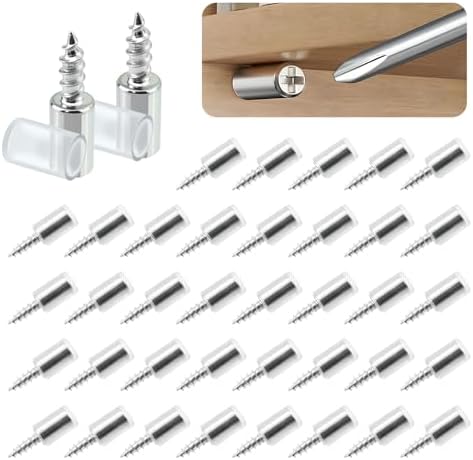
Sagging or unstable cabinet shelves usually trace back to worn plastic peg holes. Our cabinet shelf support pegs pack provides 80 nickel-plated iron self-tapping clapboard holder screws along with 80 anti-skidding silicone sleeves. Drive the self-tapping screw pegs straight into the cabinet sidewalls at your desired height, then slide the silicone sleeves over each bracket.
The nickel-plated iron construction gives firm load-bearing strength, while the silicone layer prevents the shelf from rattling or sliding out. These pegs are intended for wooden and composite cabinetry, not hollow-core plastic panels or fragile glass cases without proper glass clamps.
Sealing gaps and cracks with flexible clay
Unwanted drafts and minor water intrusion around wall holes or drain pipe cutouts call for an adaptable barrier. Our waterproof sealant putty is an unmixed sealing clay designed for one-time shaping. Knead the material by hand, press it firmly into the target crack or wall opening around the drain pipe, and smooth the surface. It provides an instant waterproof seal and cures to a flexible finish within 3 to 5 days.
This clay works well for non-structural gaps and open wall penetrations. It does not replace structural mortar, nor is it meant for high-pressure pressurized waterline breaks.
Repairing leaks and chips using epoxy putty
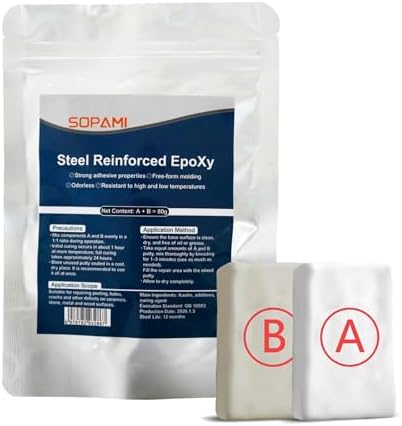
Rigid breaks in pipes, pools, metal, plastic, wood, tile, ceramic, and glass require a hard compound. Our epoxy putty fast repair clay creates a high-strength, permanent bond that resists corrosion, acids, and oils. Work the putty until uniform in color, apply it over the cleaned fracture or hole, and allow it to cure into an immovable plug.
This material sets hard enough to bridge cracked fittings and eroded metal edges. It is not designed to function as an elastic joint expansion filler or as a substitute for welding major structural frames.
Restoring pipe ends with a two-in-one tool
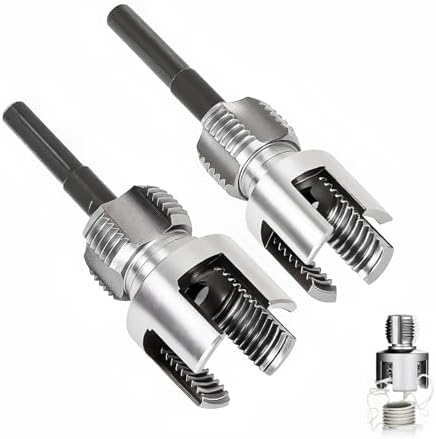
Stripped or burred plumbing connections prevent clean, watertight joints. Our 2-in-1 pipe threading tool cuts both internal and external threads in a single operation, available in 1/2-inch and 3/4-inch sizes. Fit the tool squarely over the damaged pipe end or into the fitting socket and turn it evenly to re-establish clean threads for fresh connections.
This tool handles standard 1/2-inch and 3/4-inch pipe prep tasks quickly. It cannot rethread mismatched pipe diameters outside these two standard profiles, nor will it repair severely crushed pipe walls.